By Janette Romero, Merari Taboada, and Oscar Herrera
Target employee Vanessa Jimenez says that some customers at her Wheaton, IL. store, have been following social distancing guidelines, and have, by and large, been understanding about issues no hoarding or with keeping products in stock during the global pandemic.
But some interactions between the employees and customers have gotten increasingly tense.
“There are exceptions of course,” she said. “A few people have gotten angry at us for not knowing where high in demand supplies are such as hand sanitizers and disinfectants, due to the overnight crew constantly moving inventory around since our store is currently under remodeling. So when I get to work in the morning customers get upset and yell at me demanding to speak to the manager.
“It’s a risk being in a public place with so many people shopping at a time. I wish people knew how hard my coworkers and I are working.”
All across the country, grocery stores have been seeing a tremendous rise in customer demand in response to anxieties about COVID-19. Scanning store shelves right now, this is evident; entire aisles of goods and toiletries are wiped out. This raises a startling concern for those who have infants at home.
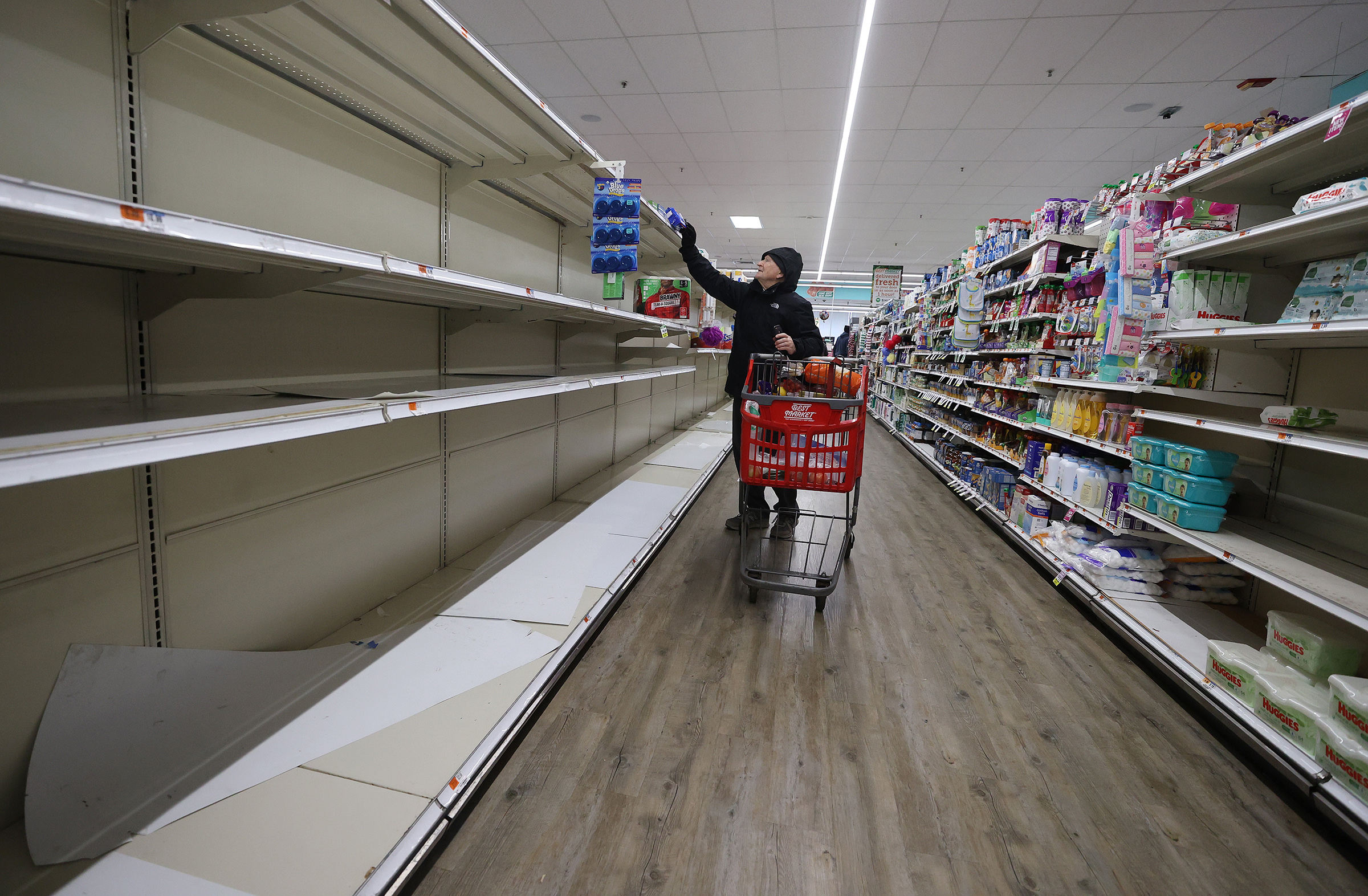
“My coworkers and I have slowly watched the panic buying rise over the last couple of weeks,” Jimenez said. “I work in the nursery department, and we’re immediately out of stock of baby food, wipes, diapers, and even medicine within an hour of our store opening.
“A mother of twins came up to me asking if we had any more baby food in the back, she’s been going store to store all day trying to find these items for her children. I had to tell her no we unfortunately do not. Sadly, all we can do is apologize.”
With the entire globe weathering COVID-19, the highly infectious respiratory disease caused by a new coronavirus, people find themselves in uncharted territory.
Over the past six weeks, Gov. J.B. Pritzker and Mayor Lori Lightfoot have combined forces in implementing preventive measures such as closing non-essential businesses, social distancing, stay-at-home orders and curfews to lower the cases of coronavirus. Like Illinois, other states have been following suit.
The stay-at-home order and closures of specific businesses and services enforced in Illinois, guarantee that social-distancing and self-quarantine be followed.
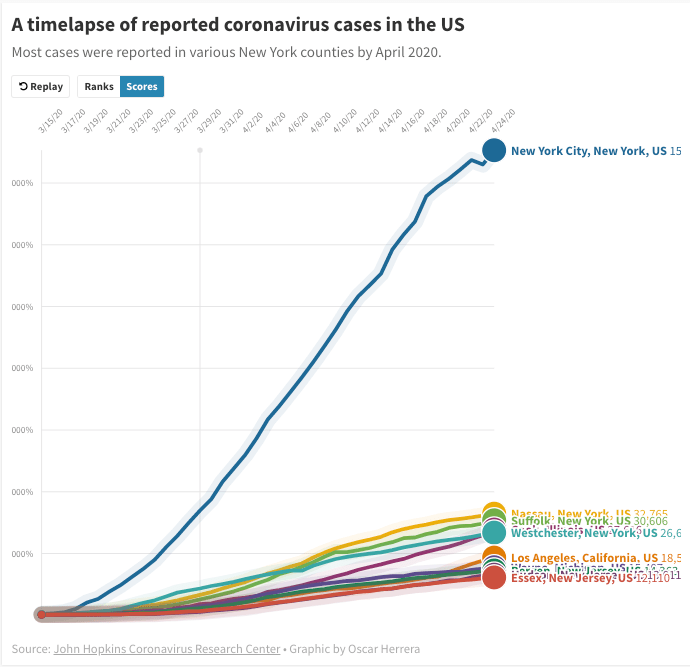
As the amount of coronavirus cases quickly rises in the United States, New York leads the pack with the most out of the 50 states. City council members of New York have even suggested temporarily shutting down the NYC subways in effort to contain the virus.
Here is an interactive chart of the reported coronavirus cases in the US. Numerous New York counties hold large amounts of coronavirus reports.
Florida has taken another approach, by opening up their beaches to the public. Despite the increase in infections in Florida, the state reopened their beaches and parks to allow citizens to exercise.
Due to the ongoing situation regarding COVID-19, college students are required to transition their education into online classes.
Jennifer Serrano, a pre-nursing student at UIC, talked about her experience dealing with these challenging obstacles.
Serrano mentioned how she has to spend more money on lab work now that it’s required to be done at home.
“I have to buy my own materials, put more money into it when I already paid a fee for my labs,” Serrano said. “I have to put extra money into school when I shouldn’t have to.”
As a frequent volunteer at Rush Hospital, Serrano was notified by the hospital when they received their first coronavirus patient.
“They emailed [the volunteers] just to tell us it’s alright and we’ll be safe to volunteer. Either way, I didn’t feel secure to go and volunteer,” she said.
The coronavirus pandemic has infected more than 3.116 million people globally, according to the WHO. As of April 29, at least 225,316 have died worldwide, and the virus has been detected in at least 177 countries according to the latest figures from Johns Hopkins University.
The virus, which causes the respiratory infection COVID-19, was first detected on Dec. 31, the government in Wuhan, China, confirmed that health authorities were treating dozens of cases. Days later, researchers in China identified a new virus that had infected dozens of people in Asia.
China has now ended its lockdown of Wuhan, as of March 19, for the first time, China reported zero local infections, which is a milestone in the ongoing fight against the pandemic. The news signaled that an end to China’s epidemic could be in sight.
However, experts said the country would need to see at least 14 consecutive days without new infections for the outbreak to be considered over.
Currently, COVID-19 is becoming the number one cause of death in the U.S than any other.
Here is an interactive chart showing how other U.S death rates are compared to the daily number of confirmed U.S. deaths from COVID-19.
As of April 29, Chicago has 12,035 confirmed cases of COVID-19 and 29,160 in Illinois, according to the City of Chicago.
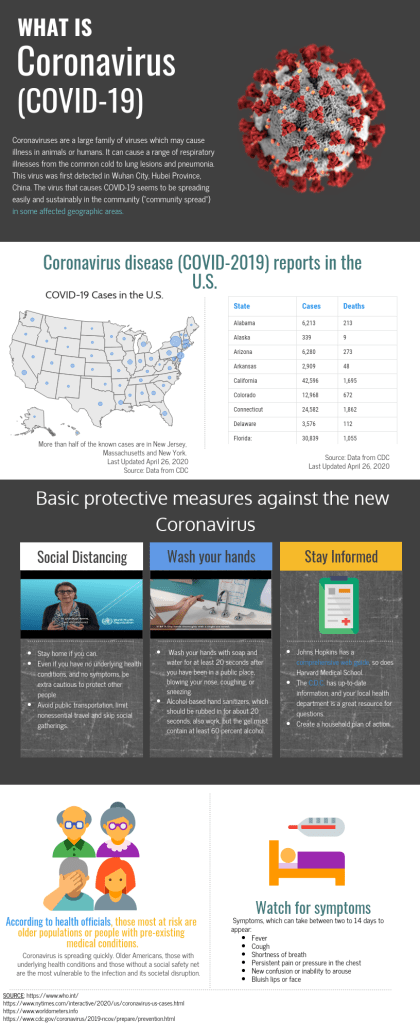
The CDC and the WHO recommend several basic measures to help prevent the spread of Covid-19:
- Wash your hands often for at least 20 seconds.
- Cover your cough or sneeze with a tissue, then throw the tissue in the trash.
- Clean and disinfect frequently touched objects.
- Stay home when you are sick.
- Contact a health worker if you have symptoms; fever and a dry cough are most common.
On Twitter, Dr. Harris stated that it is “important to remember that COVID-19 epidemic control measures may only delay cases, not prevent. However, this helps limit surge and gives hospitals time to prepare and manage. It’s the difference between finding an ICU bed & ventilator or being treated in the parking lot tent.
Healthcare workers have become vital in the fight against the infamous virus. These essential workers have to go above and beyond in their craft during these challenging times.
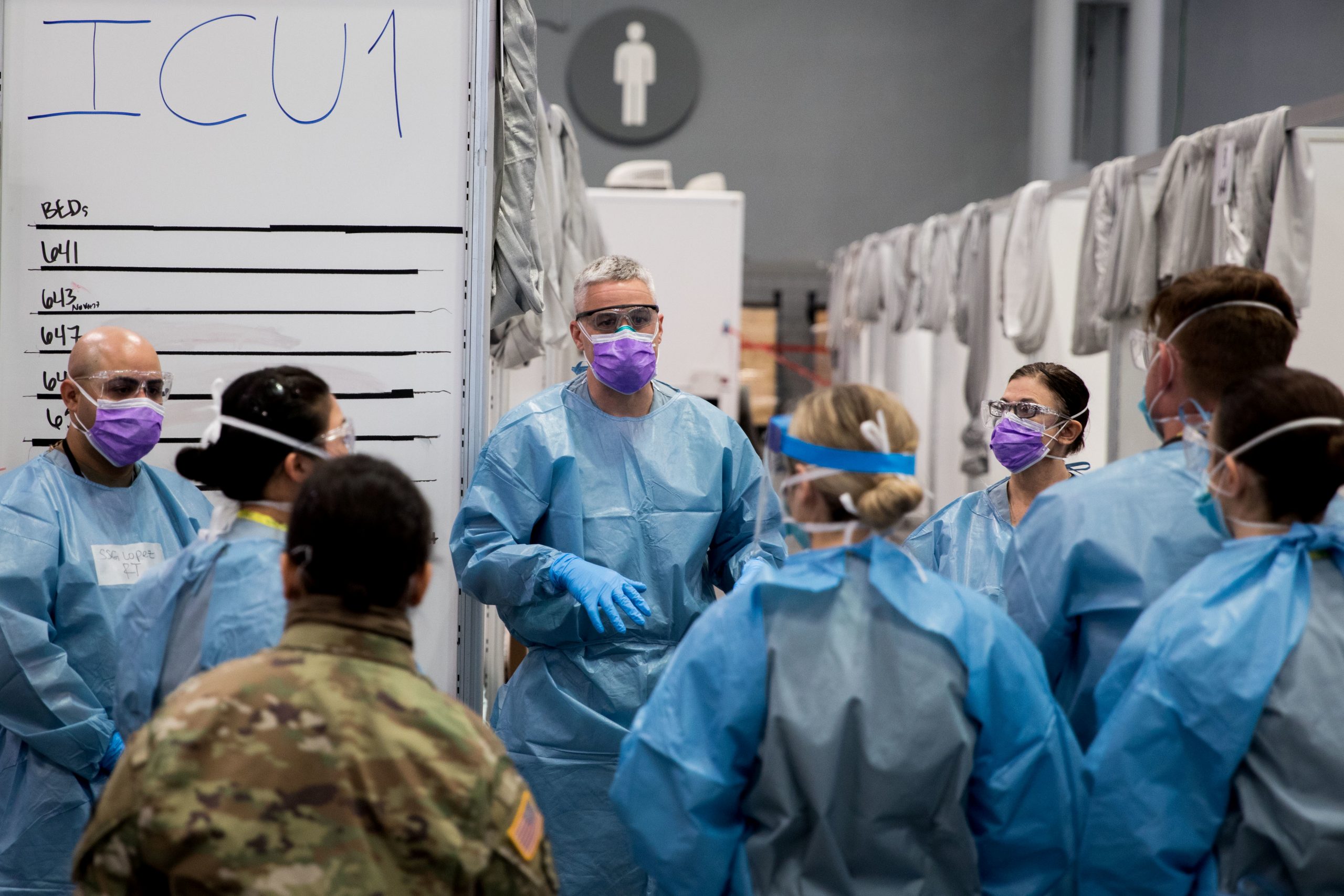
U.S. Navy/Chief Mass Communication Specialist Barry Riley/Handout via REUTERS.
Edith Mendoza, a registered nurse at Mt. Sinai Hospital, said there are extra precautions being taken.
“We are required to wear a surgical mask at all times from the moment we enter the hospital,” she said. “When we arrive to work our temperature is taken. We are given a sticker to indicate we have been screened (which includes a series of questions) and have passed the screening.”
Mendoza said there are limitations on visitors, too.
“There are no visitors allowed,” she said. “The only exception is the neonatal intensive care unit which only allows the parent(s) of the newborn and labor/delivery which allows only one support person.”
Decisions about the timing of imposing social distancing are now largely behind U.S. residents. The next critical decisions will emerge when stay-at-home policies are lifted and people return to work.
Getting that wrong will lead to a second wave of infections and a return to lockdowns, experts say. But the U.S can’t afford to repeat the same mistakes.
“It’s scary because you could be infected and not know you have it,” Mendoza said. “By the time you realize you have the disease others have been infected. Unfortunately I’m unable to work from home and carry a greater risk of getting this virus and transmitting it to my immediate family.”
“If you can’t remember how long to wash your hands to prevent the spread of germs, sing the happy birthday song and that is the time it takes to properly wash your hands.”
 Merari Data Journalism